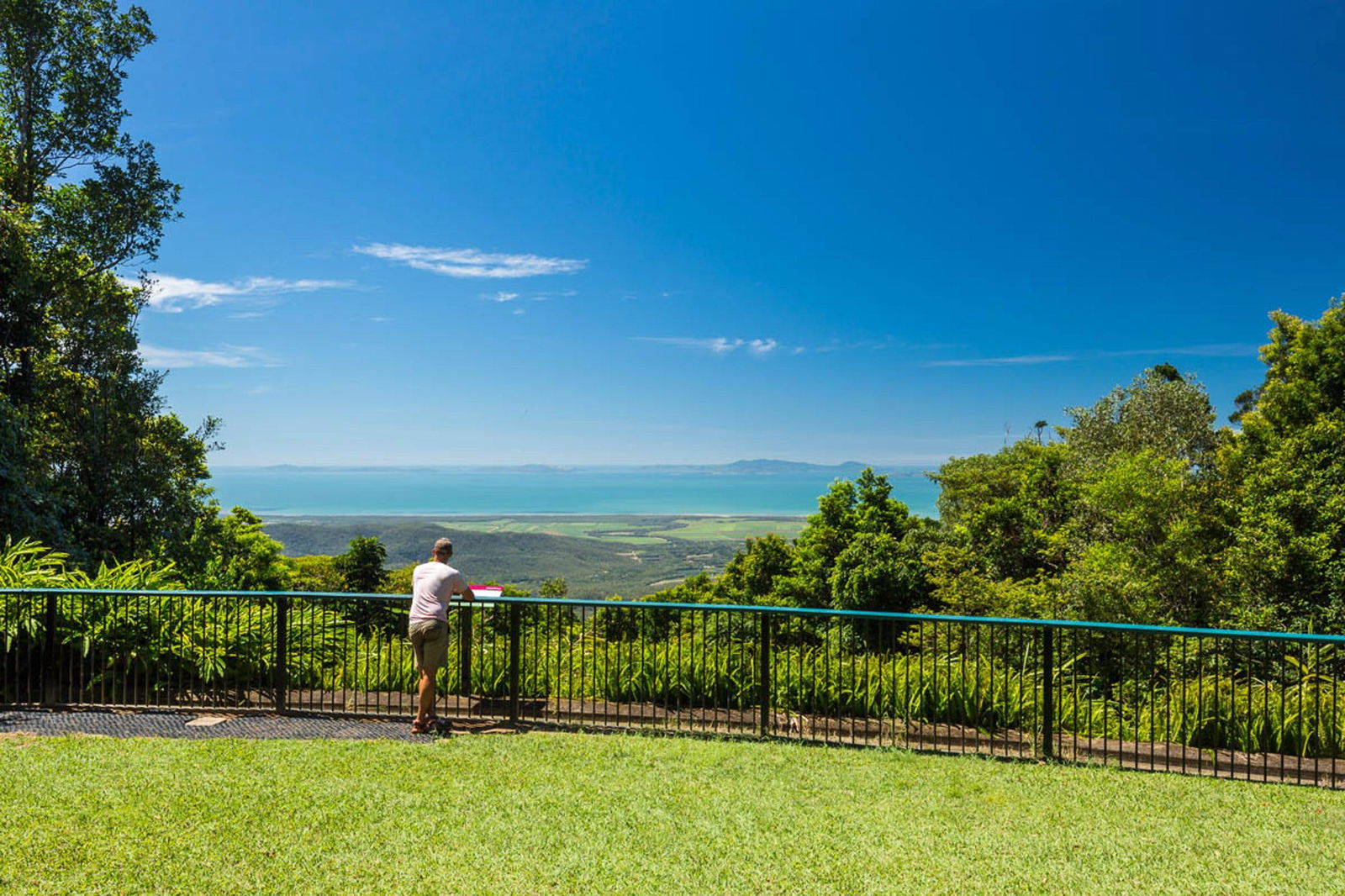
Natural Attractions Ingham provides a comprehensive Gold Coast QLD profile for you to find your business in your local Ingham 4850 area. The information presented is the most recent available and updated regularly.
Forrest Beach, also known as Allingham, is a relaxing place to visit when you need to escape from the hustle and bustle of life. Forrest Beach has a long sandy beach overlooking Orpheus Island and the Palm Island group. It is a patrolled beach and has stinger net protection during the summer months. Forrest Beach has a hotel/motel, caravan park and self-contained units. There are also a small number of shops where essential items can be purchased.
The Ingham Cemetery is a short drive from Ingham and is a fascinating place to visit. It depicts the area's strong Mediterranean influences with a magnificent display of tile mausoleums. When visiting, you are transported to a graveyard in 'Italy' with it's monumental sepulchres and chapels. Undoubtedly, the southern European mausoleums in the Catholic section of the cemetery are quite noticeable. The older style mausoleums are constructed with white stucco and marble, the traditional materials, and contain gothic style windows and doors. The more recent ones are more commonly flat-roofed with parapet surrounds and finished with terrazzo and tiles.
The Ingham Memorial Gardens (Botanical Gardens) are within walking distance of the town's main street, and are an ideal place to have a picnic lunch. The gardens have an extensive variety of north Queensland tropic vegetation and landscapes, which include a pond and water lillies. Within the pond you can often spy turtles and small fish swimming amongst the lillies. There are numerous memorials in the gardens to such people as Keith Payne, who was born and educated in Ingham and was later invested with the Victoria Cross in April 1970 by Her Majesty, Queen Elizabeth II, for his repeated acts of exceptional personal bravery and unselfish conduct during the Vietnam War. Another memorial in the gardens is of the 12 people who died when a United States Air Force Liberator B-42 Bomber, names "Texas Terror", crashed on Mount Straloch, Hinchinbrook Island.
A picturesque waterfall on Waterview Creek, rainforest, vine forest and open woodland feature in this popular section of Paluma Range National Park in the foothills of the Seaview Range. Rainforest grows on the higher slopes and fringes the creek. Poplar gum, bloodwood, Moreton Bay ash and cocky apple trees are common in the open woodland. Jourama Falls, Paluma National Park, is within the Wet Tropics World Heritage Area. Jourama Falls in Paluma Range National Park offers beautiful places to relax, camp, walk and enjoy watching birds, butterflies and other native wildlife. Enjoy a picnic in the cool air at the day-use area near the first causeway. In the rainforest along the creek, look for the buff-breasted paradise-kingfisher which arrives here from Papua New Guinea between October and April. Camp at the popular Jourama Falls camping area or take a stroll along the three kilometre return track to view Jourama Falls, Waterview Creek and surrounding rainforest. Look for the distinctive red flowers of weeping bottlebrush trees overhanging the creek, which attract the brilliant blue Ulysses butterfly.
Located south-west of Ingham, Mount Fox was created by a violent volcanic explosion about 100,000 years ago. In the explosion, a lava flow 10 metres thick spewed from the southern end of the crater and chunks of molten magma were thrown out of the volcano's vent. The well-formed crater is about 10 metres deep and covered with sparse grasses and stunted trees. Vine thicket is found in a steep gully on the southern slopes. Open eucalypt woodland dominates the crater area. Pink and long-fruited bloodwoods are also common. Mount Fox's tussock grass slopes shelter a number of small animals. On a cool day in the winter months, skinks and other reptiles can be seen basking on the volcanic bombs. During the hot summer months, the grasses provide protection from the sun and are ideal nesting places for ground-dwelling birds like the little button quail. After sunset, rufous bettongs (small wallaby-type mammals) emerge to feed on herbs and grasses. The large wing span of a wedge-tailed eagle can also be seen, as this bird of prey soars above the Mount Fox crater.
Tyto Wetlands is a unique 90-hectare natural wetland site that is home to over 230 species of birds and numerous tropical plant species in addition to such native Australian wildlife creatures as the wallaby. Located just 500 metres from the township of Ingham and situated just a few hundred metres off the Bruce Highway down Cooper Street, Tyto Wetlands is a carefully preserved natural environment that integrates lagoons, walking tracks and native flora. Experience the natural beauty and tranquility of this tropical environment by leisurely strolling along the four kilometre walkways. Interpretive signs, marked lookouts and specially created viewing platforms allow you to view local wildlife without interference or disturbance to their habitats. The area is named after the endangered Eastern Grass Owl (Tyto Capensis) Tyto meaning monkey faced owl which can be found in the Hinchinbrook Shire, one of the few places in the world where this owl can be spotted regularly. This owl can be seen leaving their grassy habitat just on dusk.
Ingham, a large, tropical town of gardens on the Herbert River, is set apart from other sugar centres of the north by its distinctive Mediterranean flavour - a legacy of an influx of Italians, Basques and Spaniards who migrated in the twilight of the nineteenth century to work in the canefields. The "Hinchinbrook Heritage Walk" is a concept that allows locals and visitors alike to walk and drive around the townships of Ingham and Halifax to gain some insight into the rich heritage of these two townships. At each designated heritage site, there is a sign post illustrating the historical significance of the particular site. The designated heritage sites within the Shire are Shire Hall, Lee's Hotel, Old Ingham Cemetery, Memorial Gardens, East Ingham Hotel, Ingham Decorating Service, Italian Hospital, Noorla Hotel, The Station Hotel, Victoria Mill and Church, Halifax Police Station, Mafeking Tree, Herbert River Museum and Gallery, New Ingham Cemetery.
Passing through North Queensland's Wet Tropics World Heritage listed area, the Wet Tropic's Walk is located in Girringun National Park. Here the Traditional Aboriginal Custodians continue their close association with the land. A variety of walks are available including short walks, overnight adventures, and for more self-sufficient walkers, a unique wilderness experience. The walk begins at the breathtaking Wallaman Falls, the largest single-drop waterfall in Australia. Early risers taking a walk along the creek may be rewarded with a glimpse of a platypus or even a southern cassowary. The four to six day walk from Yamanie to Blencoe Falls offers a true wilderness adventure, and part of the walk follows the awe-inspiring, 60 kilometre long Herbert River Gorge. Enjoy half-day walks to view the Gorge and Blencoe Falls. The walk is approximately 100 kilometres long and traverses the Wet Tropics of Queensland World Heritage Are and Einasleigh Uplands bioregion. The Wet Tropics of Queensland World Heritage Area is exceptional as one of only twelve World Heritage sites in the world the meet all four natural heritage criteria as set out in the World Heritage Convention.
Buujan Quiinbiira walk, Girringun National Park (Wallaman Falls section). The Buujan Quiinbiira (Boo-jun quin bee-rr-ar) walk starts at Wallaman Falls and winds its way through open forests and past palm-filled gullies before crossing the Herbert River to reach the Yamanie pick-up point. Day 1 - Wallaman Falls to Pack Trail camp site (23.3 kilometres) From Wallaman Falls, follow an old forestry track through a range of landscapes including she-oak dominated country, open forest and rainforest. Or, from the Wet Tropics Great Walk information shelter, wander down the road and across the Stony Creek bridge to the start of the walk. Small gullies teeming with ferns and palms are scattered throughout the forest. If you look carefully, you might catch a glimpse of the brilliant blue Ulysses butterflies fluttering through gullies or forest kingfishers perched on branches in the shade. About five kilometres along the track you will come to a large clearing. This was once a forestry quarry. Queensland Parks and Wildlife Service is rehabilitating the area. In time this scar on the landscape will disappear. The remains of an old forestry camp can be seen a further 7.2 kilometres down the track. For about 10 years this camp was home to the road gangs, forestry officers and timber cutters, who worked here. Just past the forestry camp is Garrawalt Creek, a perfect spot to stop for lunch. Spend a moment peering into the rock pools and be rewarded with a glimpse of a platypus or hear the plop of a water dragon seeking refuge in the stream. After lunch, you will cross over three more creeks. Flagstone Creek is the last creek crossing for nearly 14 kilometres, so fill up your water containers. Continue on a further 4.4 kilometres to the Pack Trail camp site, your home for the night. Day 2 - Pack Trail camp site to Yamanie pick-up point (14.2 kilometres) After a peaceful night sleeping under the stars this morning's walk will take you back in time. Re-live the past by walking part of the Dalrymple
Gugigugi (butterfly) walk, Wet Tropics Great Walk. The Gugigugi (Goo-ji-goo-ji) walk starts at the Henrietta gate pick-up point travelling through open forest and lush creek crossings. This walk crosses the Herbert River before reaching the Yamanie pick-up point. Day 1 - Henrietta gate pick-up point to Stony Creek camp site From Henrietta gate pick-up point walk 5.2 kilometres to Lemon Tree Gully, aptly names for the lemon tree that still bears fruit. After passing through the gully, walk a further six kilometres to Henrietta Creek, an ideal rest spot. Fill water bottles here as there is no water until the camp site, 13 kilometres away. The track from Henrietta Creek then passes through area that was previously used for grazing. The land was purchased by the Queensland Government in 1994 and made part of Girringun National Park. The park protects habitat for the endangered mahogany glider and work is underway to control the spread of pest plans and to remove pest animals. Day 2 Stony Creek camp site to Yamanie pick-up point From the camp site, walk 4.4 kilometre to Garrawalk Creek. The creeks along this part of the walk run into the Herbert River which is not far from the track. Crocodiles can be found in the Herbert River. Be aware! You are now in croc country. Estuarine or saltwater crocodiles are an important part of north Queensland's wetlands, freshwater and marine areas. They are one of the largest predators in these habitats and help to maintain the overall health and balance of these ecosystems. They live mainly in the tidal reaches of rivers, as well as in freshwater lagoons, swamps and waterways - up to hundreds of kilometres from the sea. Crocodiles are most active at night. Remember to be croc wise in croc country. From the creek, walk another three kilometres to a grove of cycads. These ancient plants were part of the landscape when dinosaurs roamed the land and were the dominant form of vegetation about 193-136 million years ago, changing very little since tha